Who Wants to Be a Millionaire?!
With your host, CAW’s own Donna Manganello!

Senior Progam Manager Donna Mananello
“Knowledge is power and money is a life skill. Just being able to make informed decisions about spending and saving empowers young people, because knowing how money works is what’s going to get you ahead financially. Just having our young people develop some financial literacy gives them access to things that they may never have thought were possible for them.”
Creative Art Works is employing nearly 130 NYC Youth Apprentices this summer. Beyond sharpening their creativity and developing transferable job skills, our YAs are acquiring the practical tools needed to transition into adult life and professional careers, and that includes learning how to manage money responsibly. Today’s youth are more financially-savvy than ever—many already hold bank accounts—but they are also surrounded by technologies that make it all too easy to spend money with the tap of a button.
To help set them up for fiscal responsibility, Senior Program Manager Donna Manganello presented a “financial empowerment” workshop at all six of our worksites. This workshop is founded on the principle that it’s never too early to start saving for the future, but the advice is worthwhile to people of all ages.
“Today’s workshop helped me understand that money is not just about spending. It is about planning ahead, setting goals, and making smart choices that match what is important to me. It also showed me that talking about money is helpful and should not be something to avoid.”
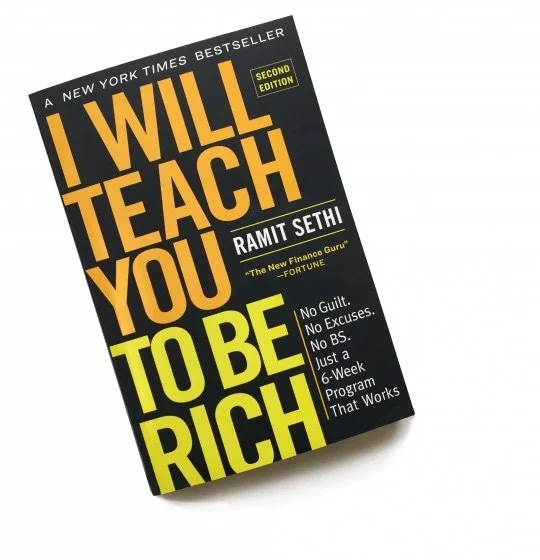
To paraphrase an old E.F. Hutton ad campaign, when Donna talks, people listen. Donna is, among other things, a VITA / TCE certified volunteer tax preparer. Under the auspices of New York Cares, she has been trained to help students and families apply for financial aid as well as interpret often-confusing financial aid offers. She is a student of money maven Ramit Sethi, author of the New York Times bestseller, “I Will Teach You To Be Rich.” Donna is a member of Sethi’s money coaching program, and she has even been featured in his newsletter.
Donna says she grew up in the era when it was considered impolite to talk about money, so she didn’t start learning how money worked until she was an adult. Since then she has become very passionate about teaching young people the things that she wasn’t taught at their age. Donna says personal finance should be accessible to everyone.
Donna structured her workshop this summer around a home-version of the quiz show, “Who Wants to Be a Millionaire?” Contestants are chosen at random and can even call a lifeline if they are struggling with a question. Do you think you have what it takes to win this game? Take the quiz and find out!
1. In what year did women gain the legal right to open bank accounts, obtain credit cards, and apply for loans without a male co-signer?
- 1920
- 1965
- 1974
- 1999
C. Prior to the Equal Credit Opportunity Act of 1974, banks could refuse to issue credit cards or open bank accounts to unmarried women without a male co-signer. Donna uses this historic point to emphasize that financial literacy equals true independence.
To build that foundation, she teaches youth employees the three basic accounts everyone needs: a checking account for daily expenses, a high-yield savings account for emergencies and goals, and a brokerage/investment account for long-term growth.
2. When it comes to creating a budget, what’s one recommended method to follow?
- Put all your money under a mattress
- Download the YNAB app
- Pay for all purchases on a credit card and only pay the minimum
- Use the 20/50/30 method
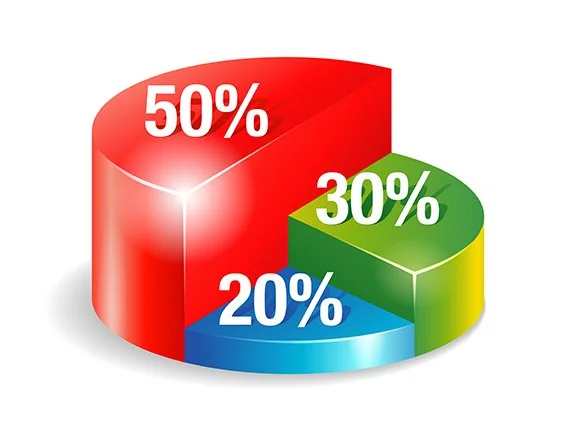
D. The 20/50/30 method, means 20% or your take-home pay is for savings, 50% for your fixed costs and needs, and 30% is for your wants. The 20% comes first in this rule of thumb because one of the basic tenets of personal finance is “pay yourself first.” Because New York City has a very high cost of living, Donna adjusts the 50% fixed costs up to 60%, and reduces wants to 20%. If your fixed costs are over 60%, then you have to ask yourself some questions: What changes do you need to make? Do you need to cut some things out? Do you need to earn more money?
“Automate. Automate. Automate. The best way to make sure you always pay yourself first is to automate your paycheck. Talk to your payroll manager, use the autopay and auto transfer features in your banking app, and set it up so that 20% of your pay goes directly into your retirement fund, savings or brokerage account.”
But what if you want to go to a concert or take a vacation? Donna says she won't tell you "no," but the key is intentionality: "That's what your ‘wants’ bucket is for. Being intentional with your spending means that you have the money first or are saving for these high-cost items so that you don't get yourself into high-interest credit card debt."
3. What do credit scores and Taylor Swift have in common?

- They have the same amount of followers
- They are the same age
- They both impact your dating life
- They have nothing in common
B. Credit Scores and Taylor Swift are the same age. The first standardized credit score was introduced in 1989 by the Fair Isaac Corporation (FICO). For the first time, lenders nationwide could use one universal metric across all three national credit bureaus (Equifax, Experian, TransUnion).
Donna says that, contrary to what many young people think, having a credit card is not optional, because you need one to build credit. And you need credit when you apply for an apartment, get a car loan, or want to buy a house and need to apply for a mortgage.
But you must use the credit card responsibly. Pay it off in full and on time every month. And make sure to shop around for a good deal. Ask questions like, what are the annual fees? What's the annual percentage rate? What's the billing cycle?
4. When do you pay taxes?
- January 1st
- April 15th
- Year Round
- Never
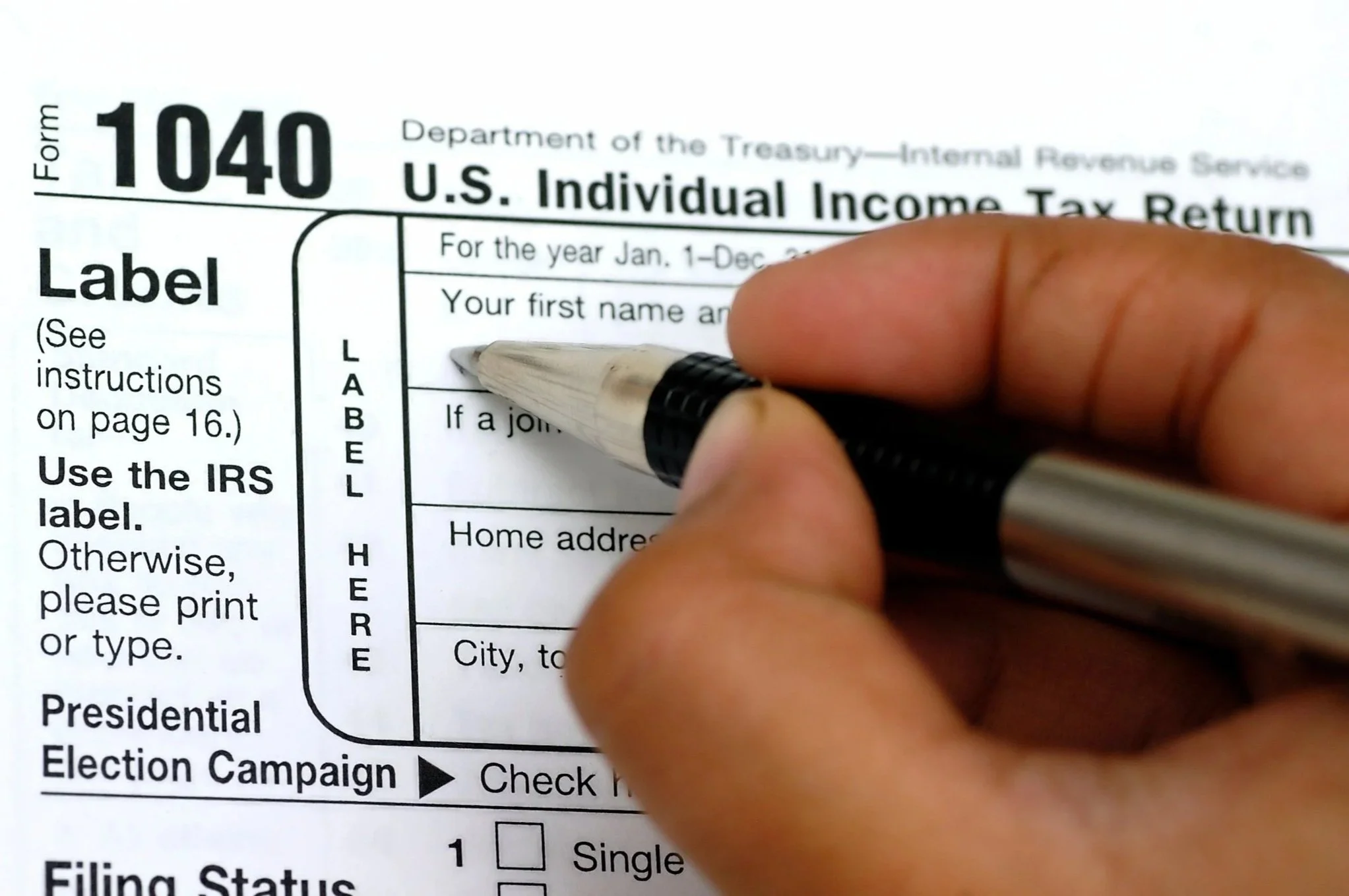
C. You pay taxes year-round through withholding as an employee or quarterly estimated tax payments if you are self-employed, a freelancer, or an investor. You also pay sales taxes on everyday goods and services such as dining out, electronics, cosmetics, gas and phone bills (while some things aren’t, such as some groceries, essential clothing priced under $110, and prescription medications.)
Taxes are not glamorous, but they really are not scary either. According to Donna, your best possible outcome is to come as close to owing nothing as possible when tax day comes around. Refunds are fun, but they are essentially an interest-free loan you make to the government.
5. Beyonce and Cardi both have $2,550 to invest, and they want to retire by age 55. Beyonce is 25 years old and contributes $100 per month to her investment account for 30 years. Cardi is 40 years old and contributes $200 per month to her investment account for 15 years. Who will have more money by the time they are 55?
- Beyonce who invested $100/month for 30 years
- Cardi who invested $200/month for 15 years
- Both will earn the same amount
- How should I know?!
A. While Beyonce and Cardi both invested the exact same total amount of cash ($38,550), Beyonce reaps the benefits of compound interest by starting sooner. Cardi’s money only gets 15 years to double and grow. Beyoncé’s extra 15 years allow her balance to go through multiple additional doubling cycles. Assuming an average annual investment return of 7%, Cardi would earn $32,107 in compound interest, while Beyonce would earn a whopping $104,144! Beyonce ends up with 3 times as much free interest simply because her money had twice as much time to grow.
In case you were wondering, $2,550 is the amount of money a CAW YA makes, pre-tax, if they work 25 hours a week for 6 weeks. Donna grounds her workshop with real-world examples. But let’s be honest. In this example, neither Beyonce nor Cardi will have enough money to retire at age 55 with their current investment strategy. They’ll need to follow the strategy of a former CAW youth apprentice who recently opened a Roth IRA at age 20.
Donna’s Mind-Blowing Real World Example:
To prove the power of compound interest, Donna shares the story of a former CAW youth apprentice who she helped to open a Roth IRA at age 20. When Donna ran the numbers on a compound interest calculator, the youth workers were stunned: by investing early and maxing out their contributions every year, that 20-year-old is on track to have $1.5 million by age 60. If they hang in there just five more years to let compound interest work its magic, that number jumps to $2.1 million.
“There’s that saying, the best time to plant a tree was 20 years ago. The second best time is today. And that’s the same with investing. It can be scary for some people because there’s this myth that investing is gambling and it’s not. When I talk about investing, it’s not get-rich-quick schemes, or putting all your money in individual stocks, or day trading. I’m talking about investing for the long-term in index funds or target date funds with a diversified portfolio to protect against risk.”
How’d you do?
Did you ace the test, or do you need to sit in on one of Donna’s workshops? Let us know in the comments!