Metamorphosis in the Classroom
A new CAW integrated program at PS102 combines science, literacy, and artmaking
From caterpillars to butterflies and tadpoles to frogs, many animals change their form as they grow. That’s what 1st- and 2nd-grade students at PS102 explored through Amplify Science, a curriculum which, integrates scientific inquiry with early literacy skills. The unit "The Big Outdoors” focuses on environmental changes, such as weather, the water cycle, and, in this case, how animals change.
This new partnership with PS 102 was made possible by the Digital Inclusion and Literacy Initiative of the New York City Council. As always, CAW’s integrated learning programs amplify the core content areas through the artistic process, which naturally enhances social-emotional learning (SEL).
Science & Literature Meet Art
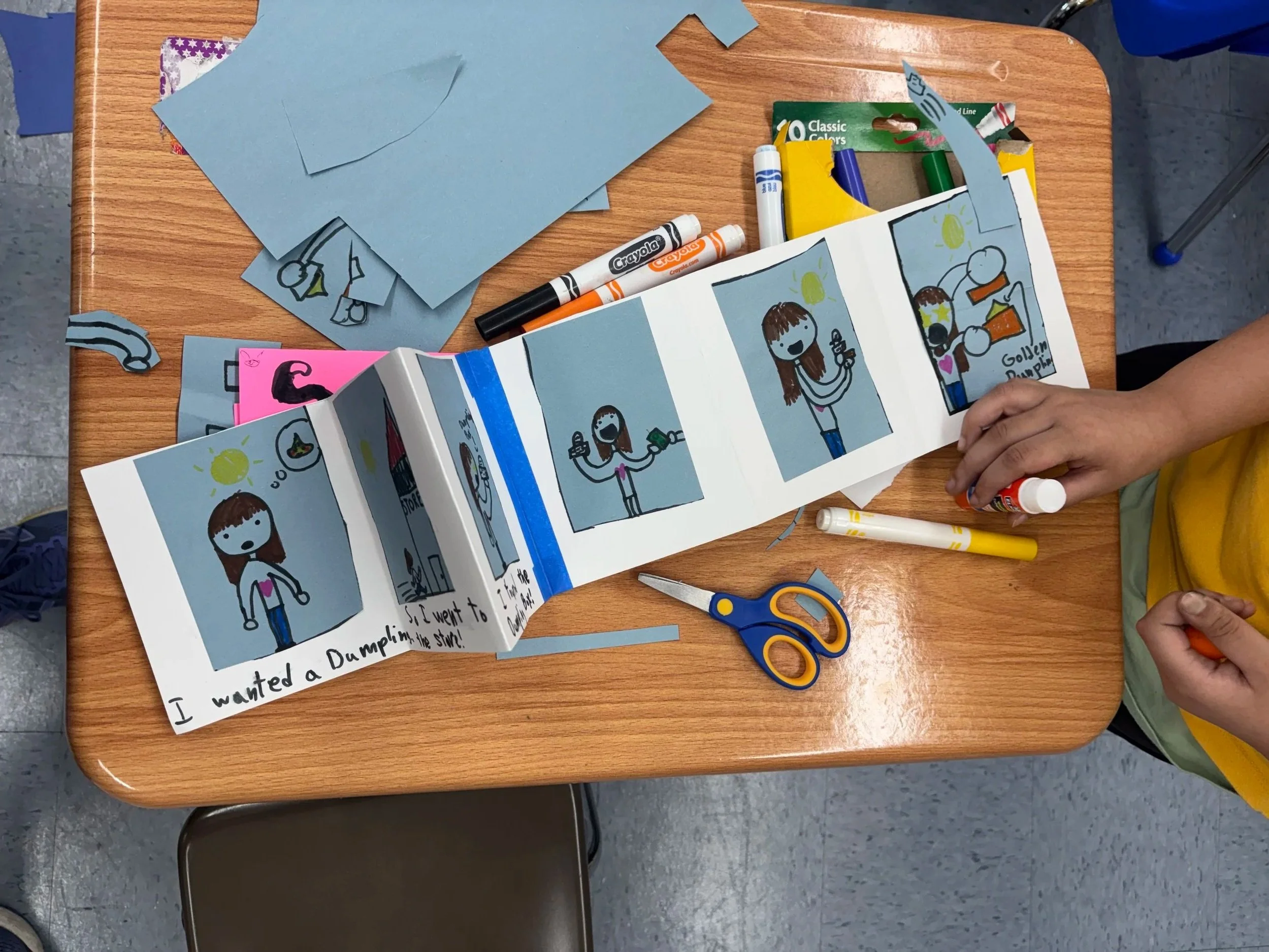
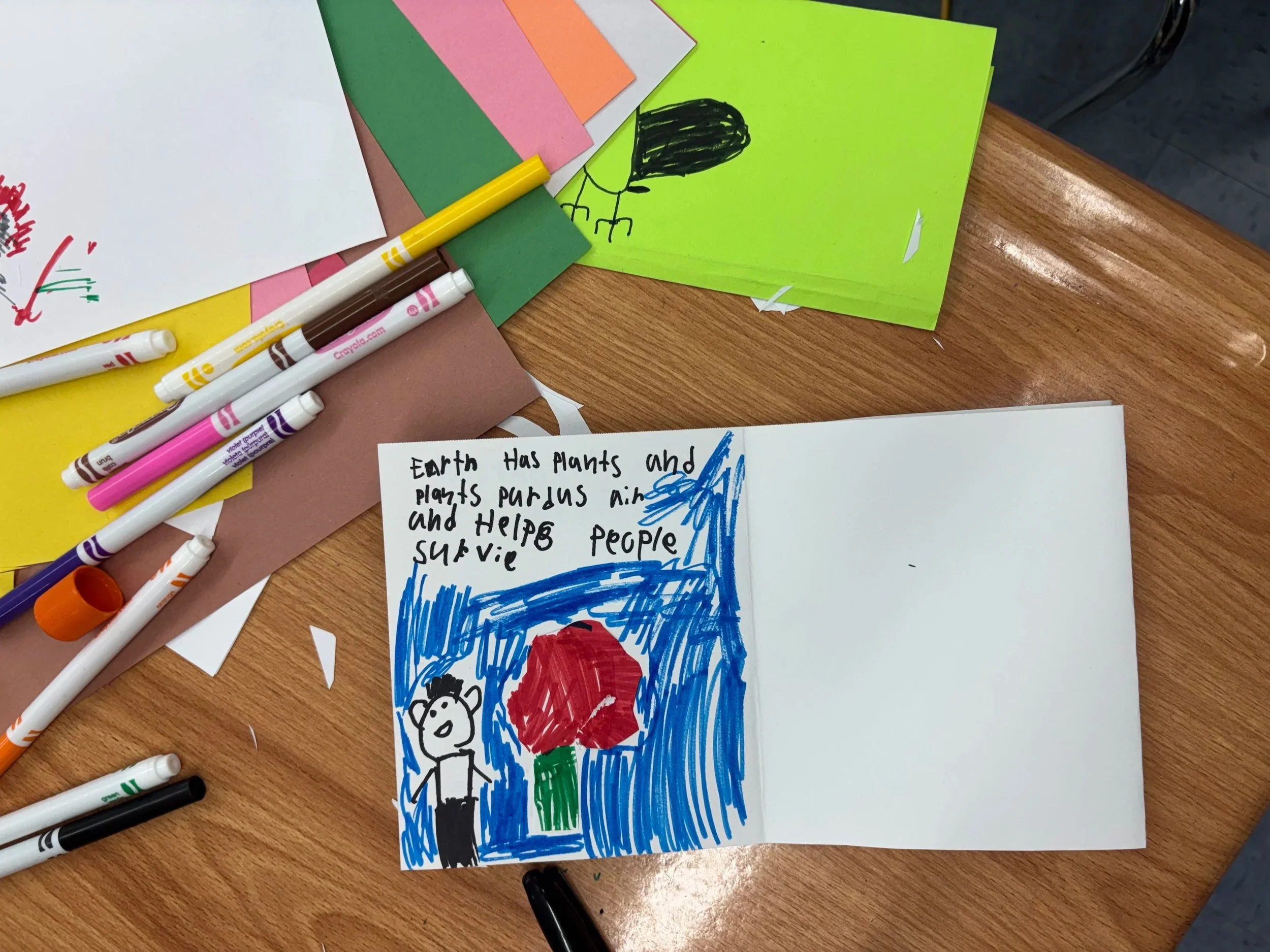
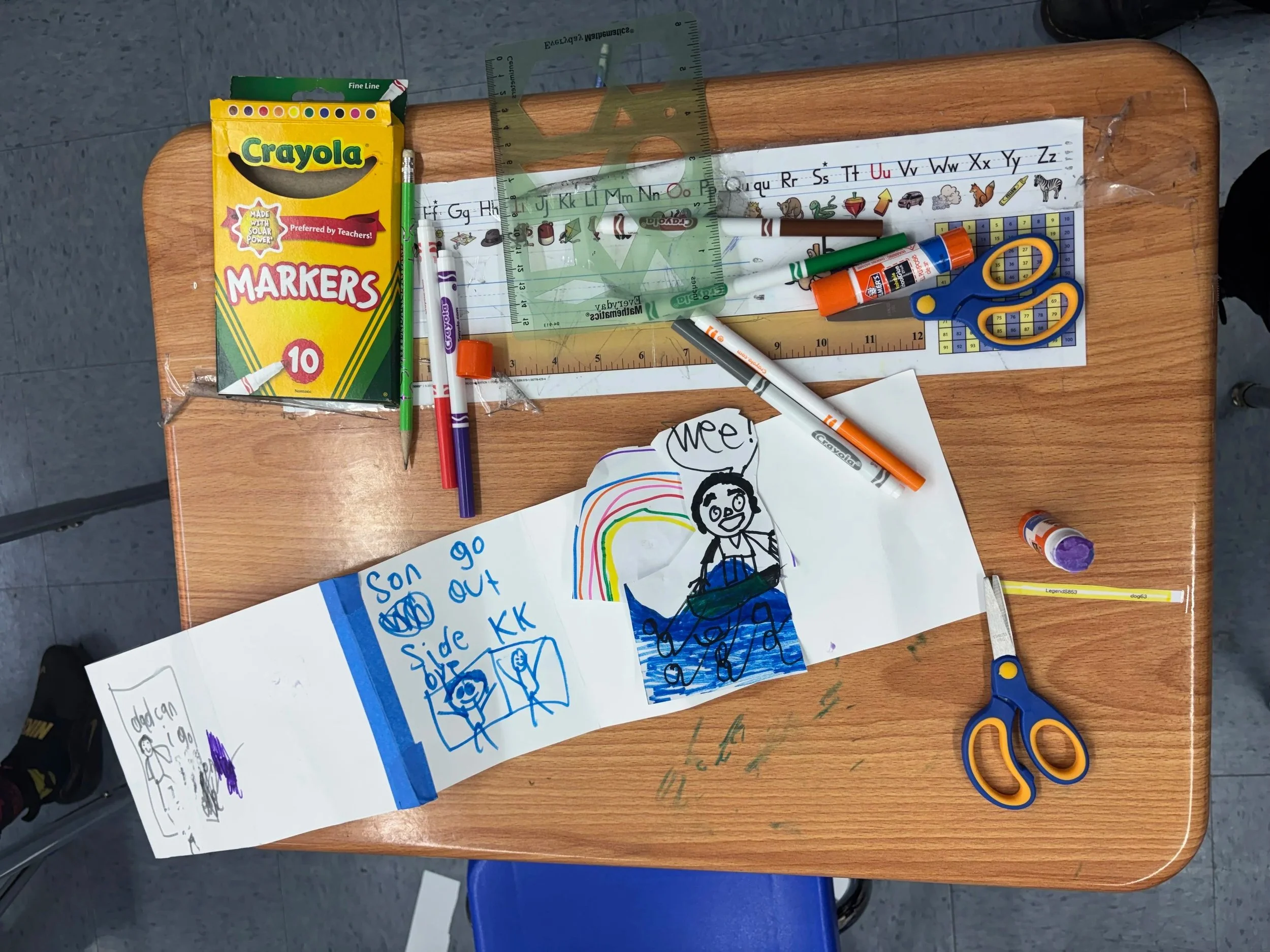
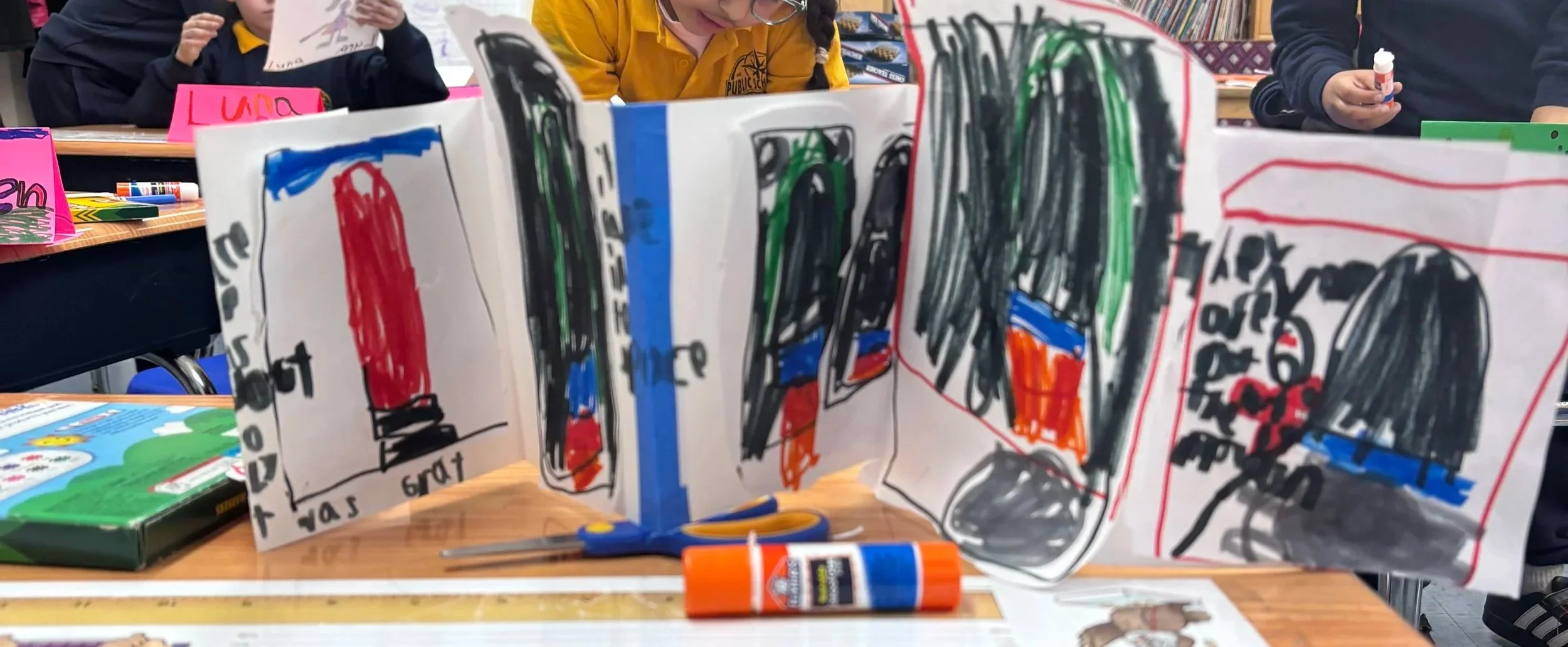
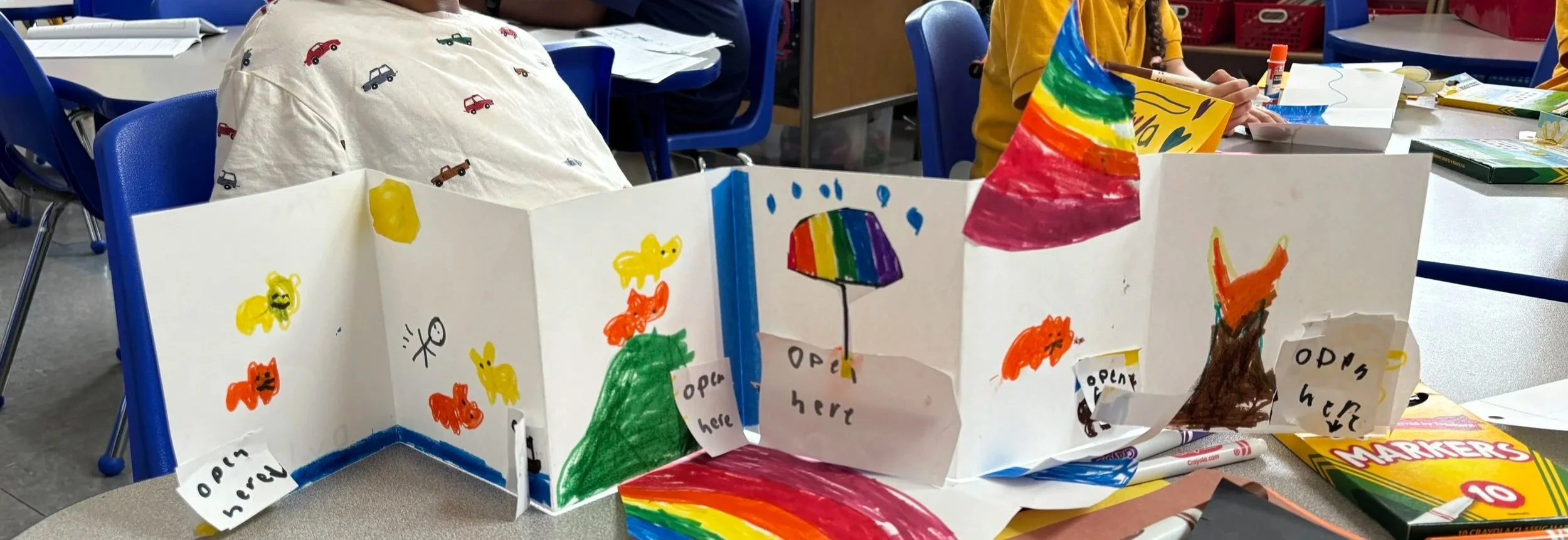
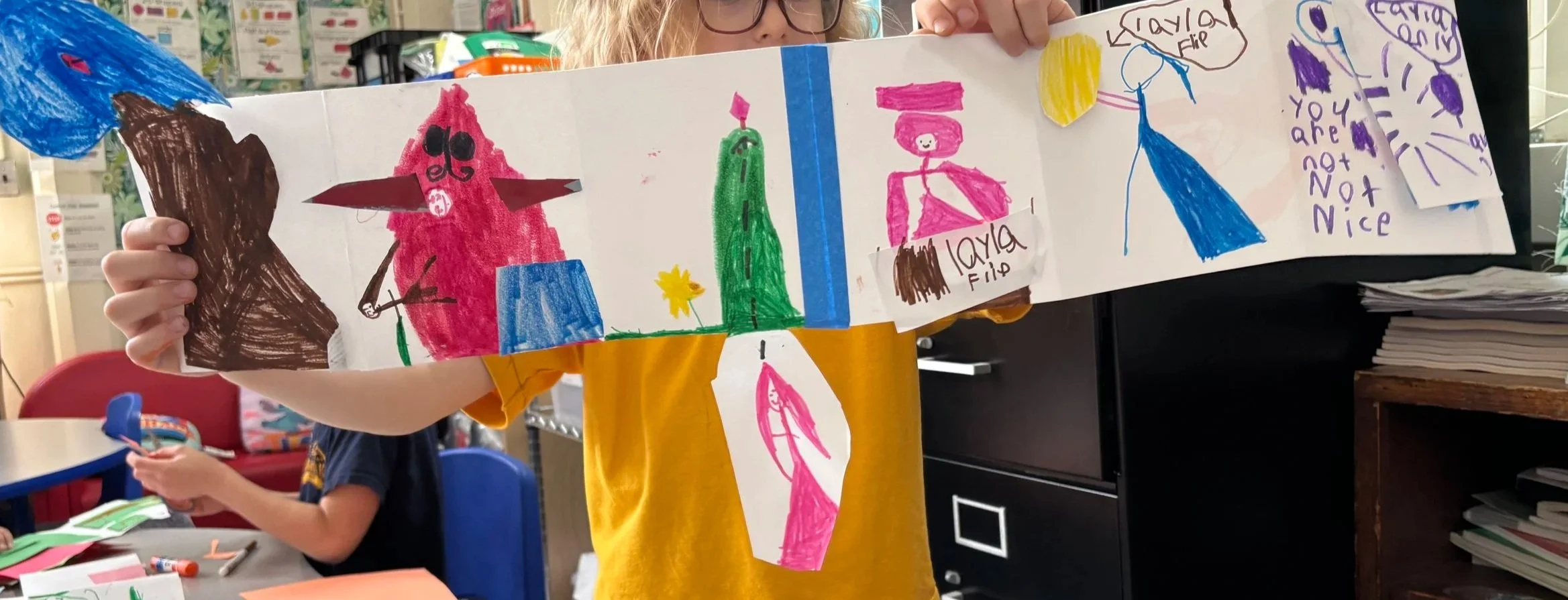
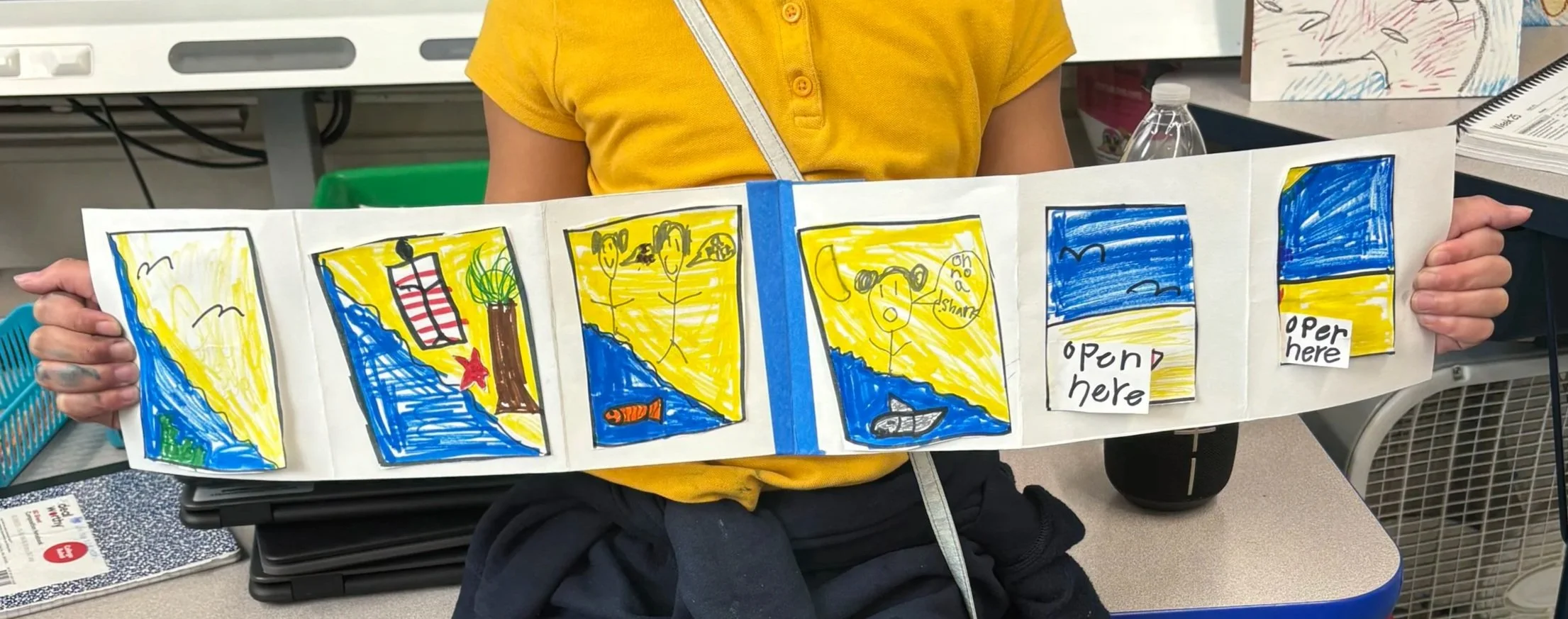
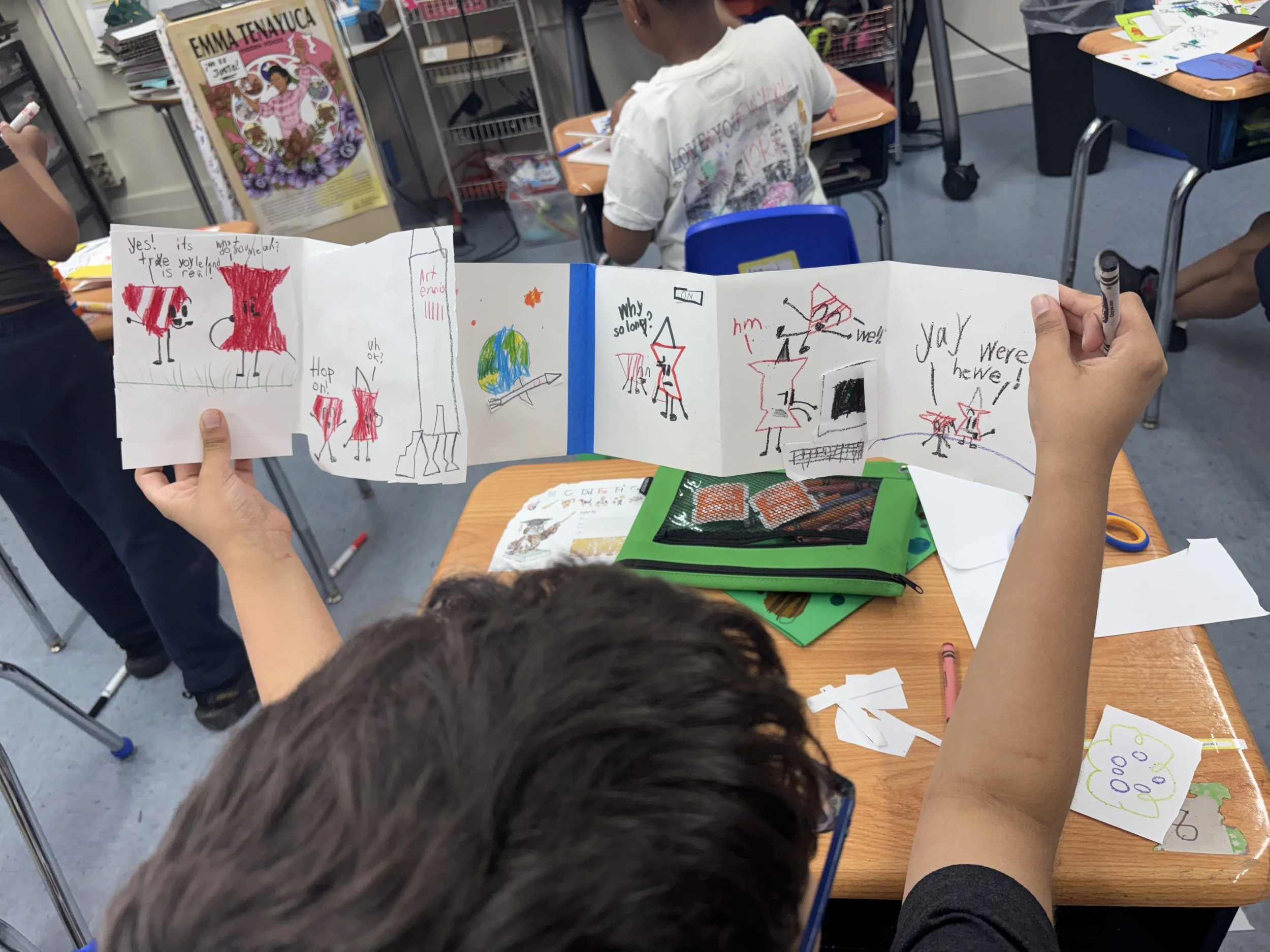
Students exercised their illustration and narrative-building skills by creating three-page accordion books, folding, coloring, stamping, and gluing materials to tell a story about their experiences in nature.
Multisensory Artmaking
CAW Teaching Artist Alejandra Mandelblum employed various learning modalities—visual, auditory, reading/writing, and kinesthetic—expanding students' engagement with materials by encouraging them to use their senses before creating.
During a demonstration of plasticine techniques, Alejandra told her students, “I want you to roll it in your hands. Then I want you to smell it. Then I want you to break it down a bit. And when it is warm in your hands, then you start sculpting.”
After kneading and sniffing her plasticine, one student declared, "It smells like Princess Bubblegum!"
This multisensory approach recognizes that students absorb and process information in ways that fit their individual styles. When students have the freedom to learn in a non-rigid way, they obtain new skills without realizing it. Alejandra observed how, through various activities, each student learned to collaborate and share their materials. She recalls that one student realized he needed black for the pupils of his sculpture's eyes, and another student offered to give him some of his black, since he didn't need it all.
Transformations
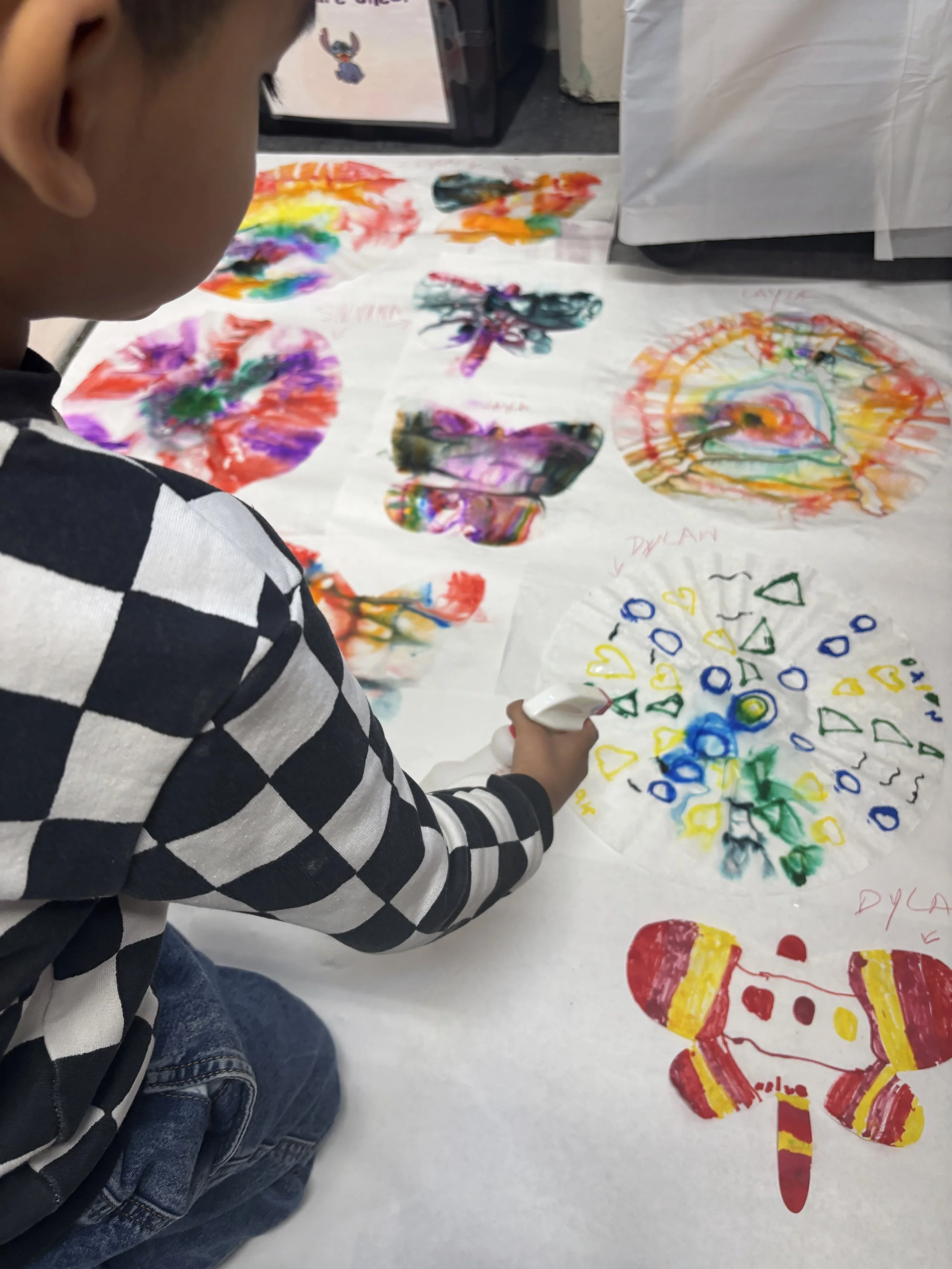
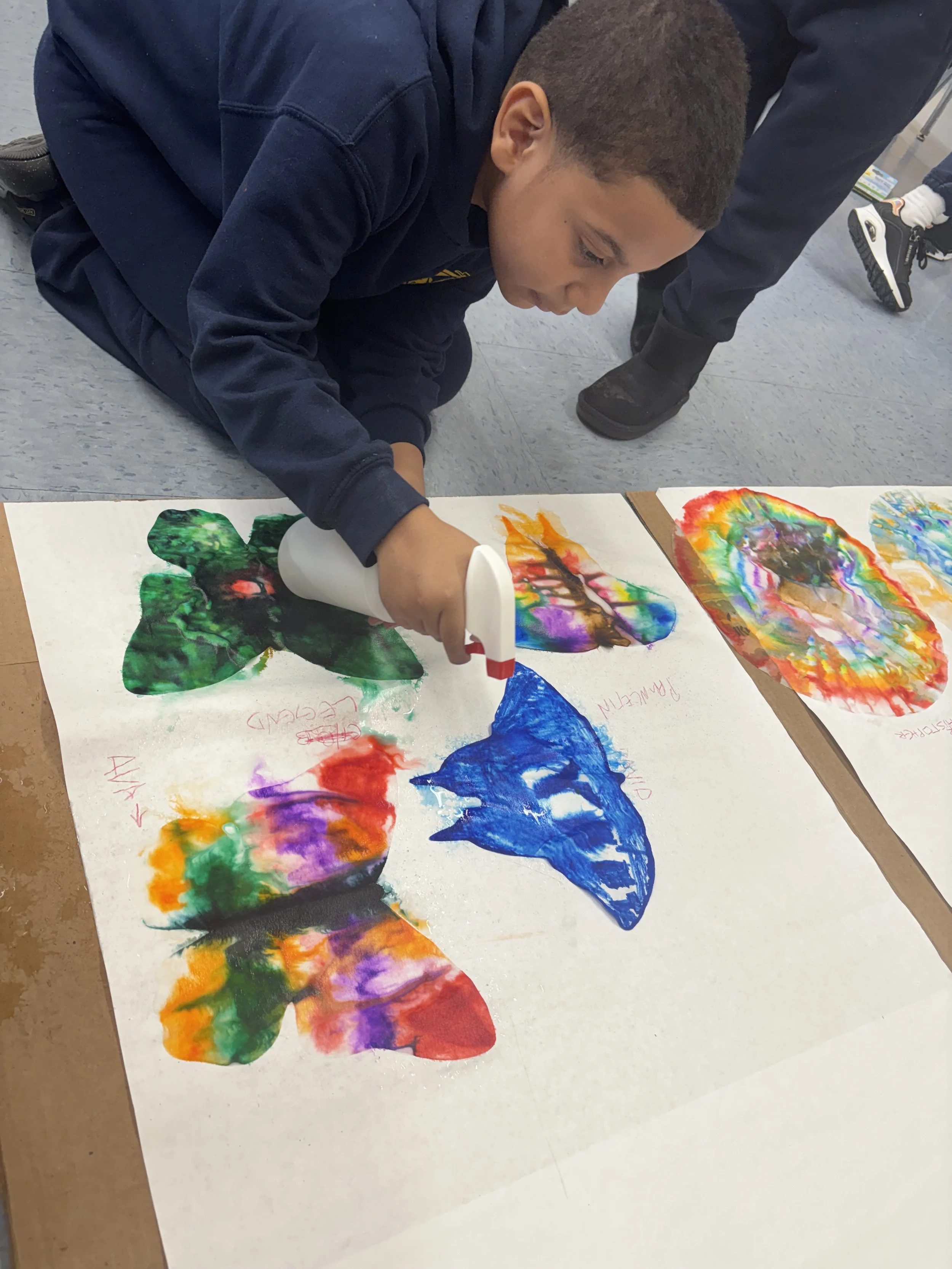
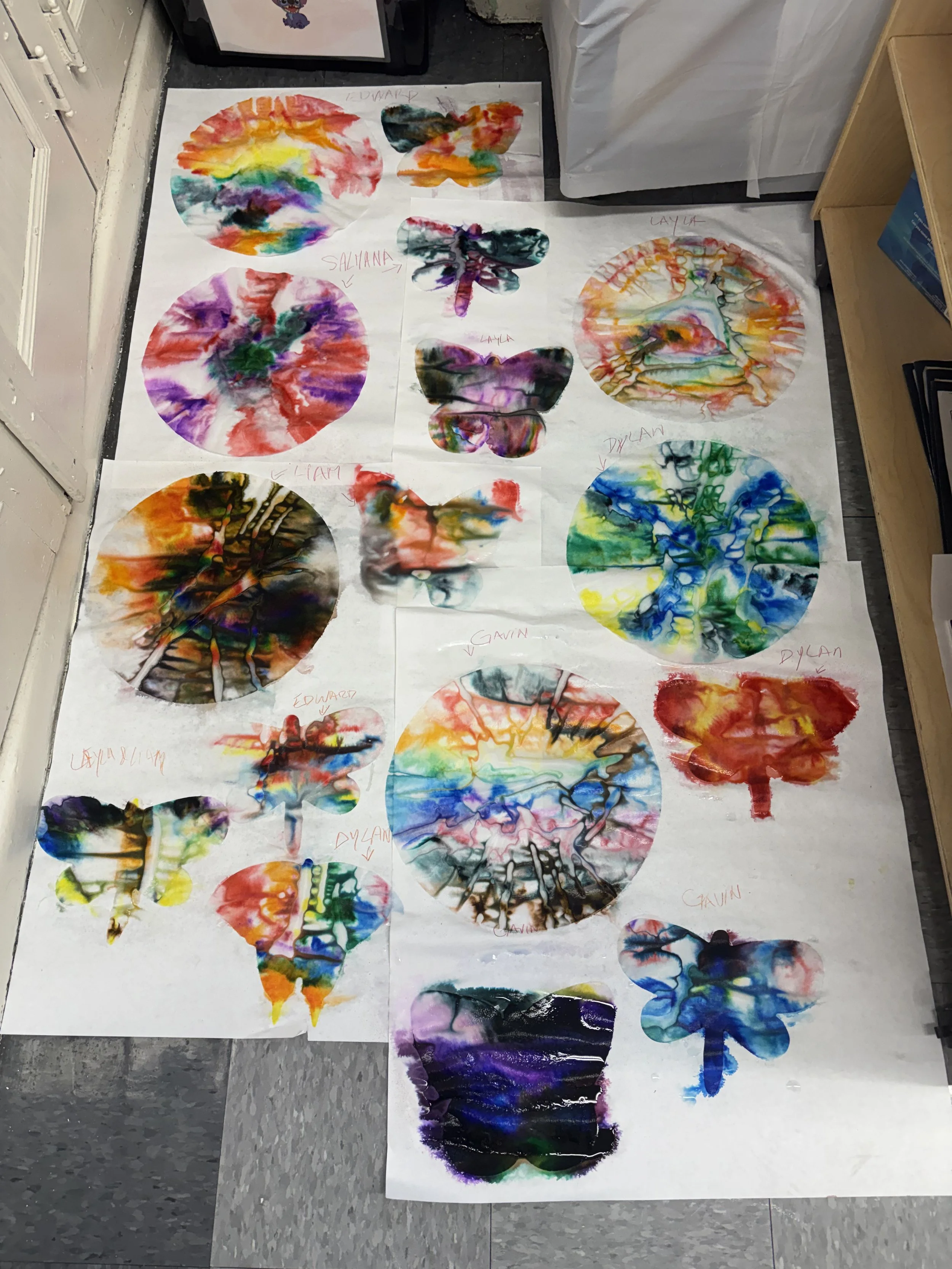
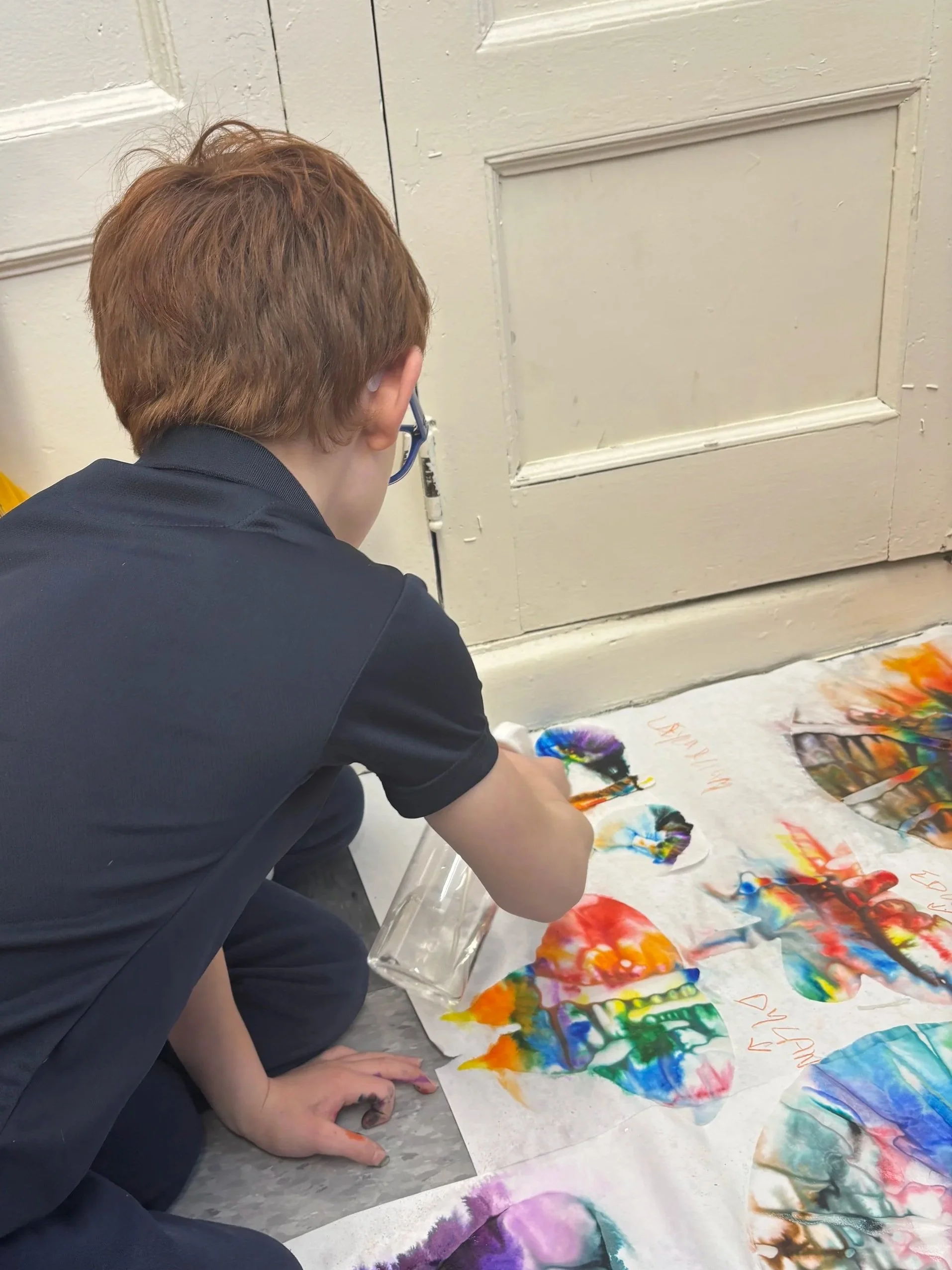
During a unit on symmetry, students examined radial symmetry in nature — looking at the lines, shapes, and patterns in flowers, snowflakes, and fruit. From there, students created mandala designs on coffee filters, utilizing various types of lines to construct patterns and geometric shapes. The final, transformative step – adding water to their work – dissolved the intricate details they had carefully constructed. This transformative process allowed students to observe their designs morph into something new altogether, mirroring the caterpillar's transformation into a butterfly.
Teaching Staff
Alejandra Mandelblum
Teaching Artist
Riki Sabel
Senior Manager of Teaching & Learning
Donna Manganello
Senior Program Manager
Creative Art Works’ programs are made possible by the New York State Council on the Arts with the support of the Office of the Governor and the New York State Legislature. Creative Art Works’ school-based programs also receive support from the Cornelia T. Bailey Foundation. This program was made possible, in part by the New York City Council and its Digital Inclusion and Literacy Initiative, in partnership with Council Members Diana Ayala and Elsie Encarnacion.